
- Contact Us
- Track Your Order
- Returns
- Size Charts
- FAQs
- Messanger
- Voicemail
- Text Message
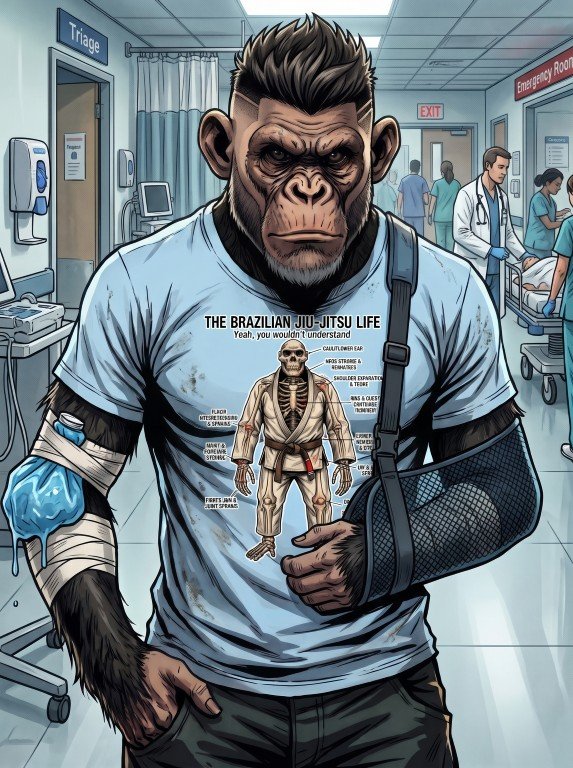
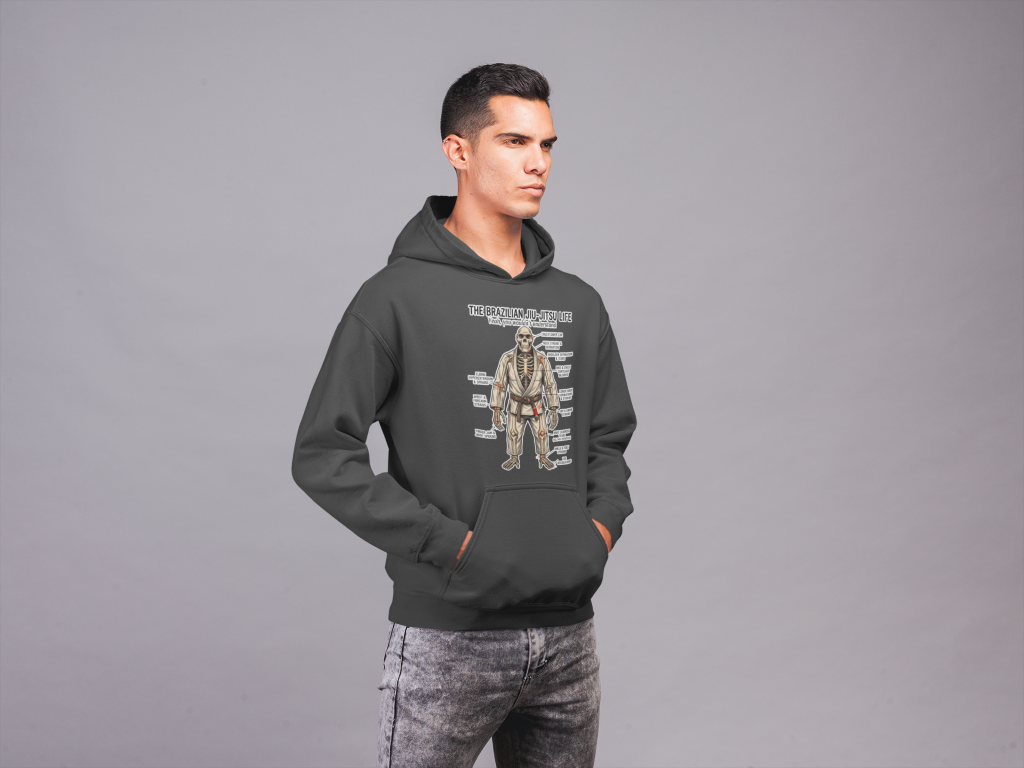
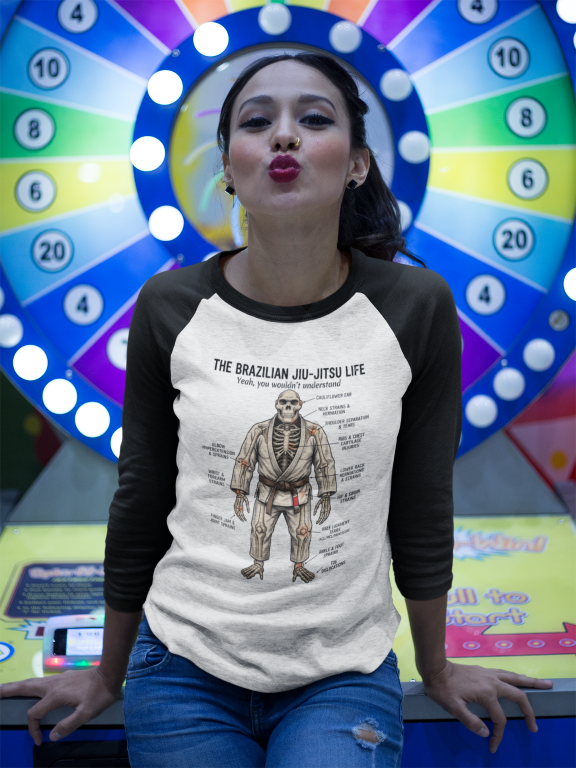

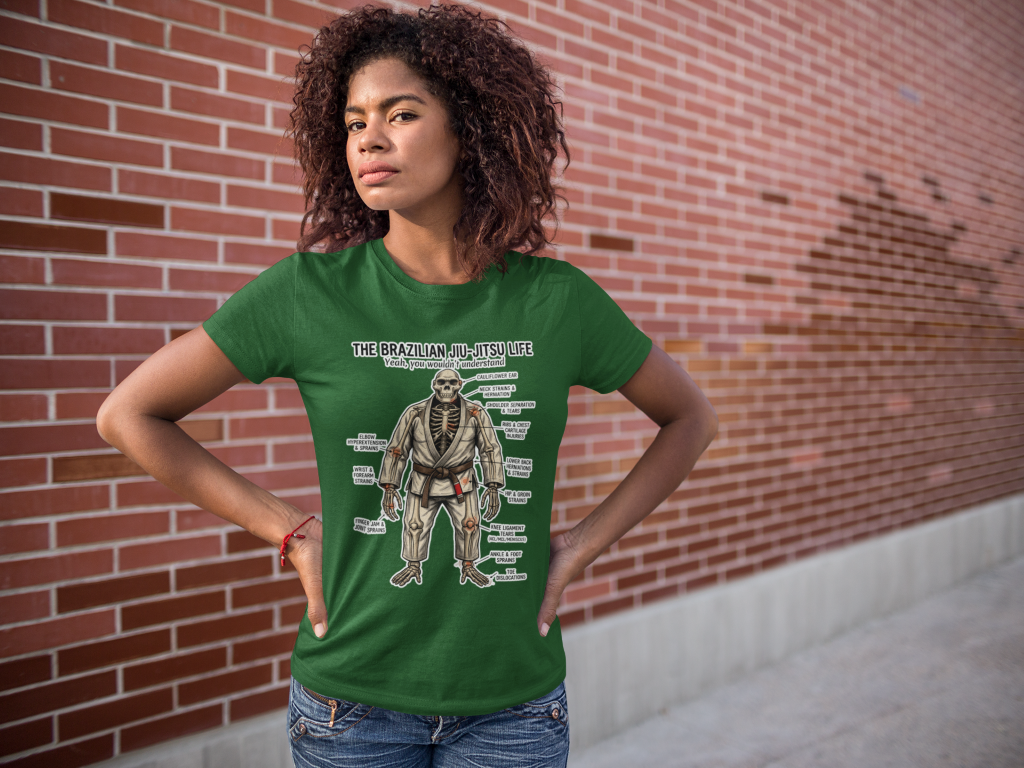

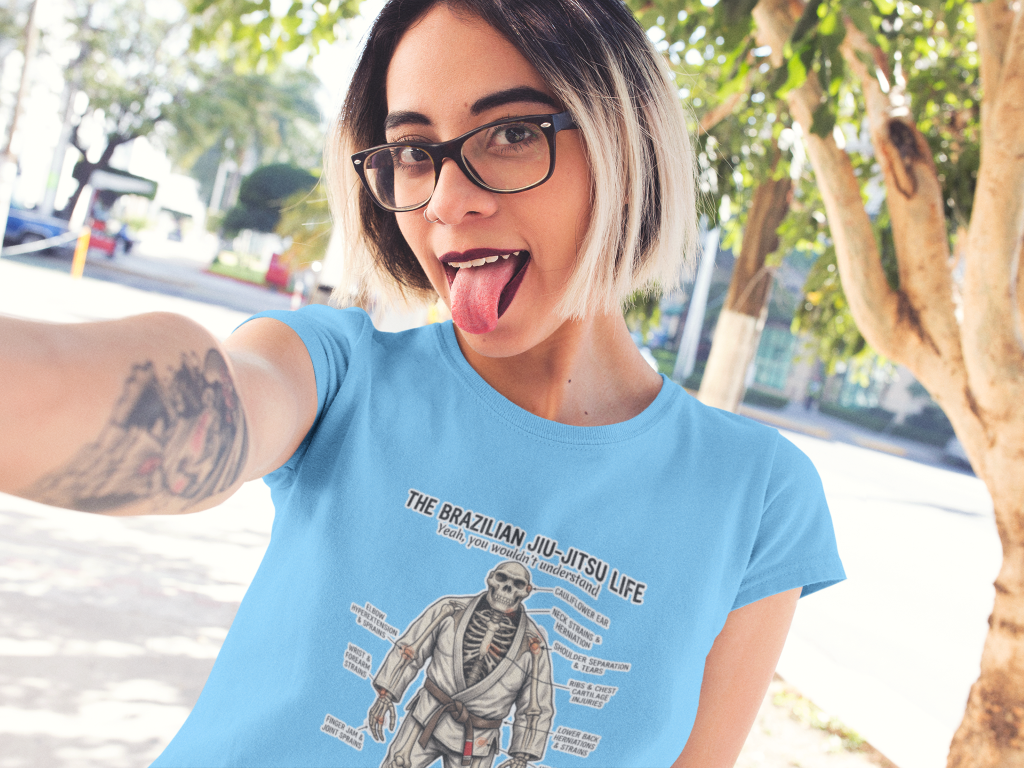
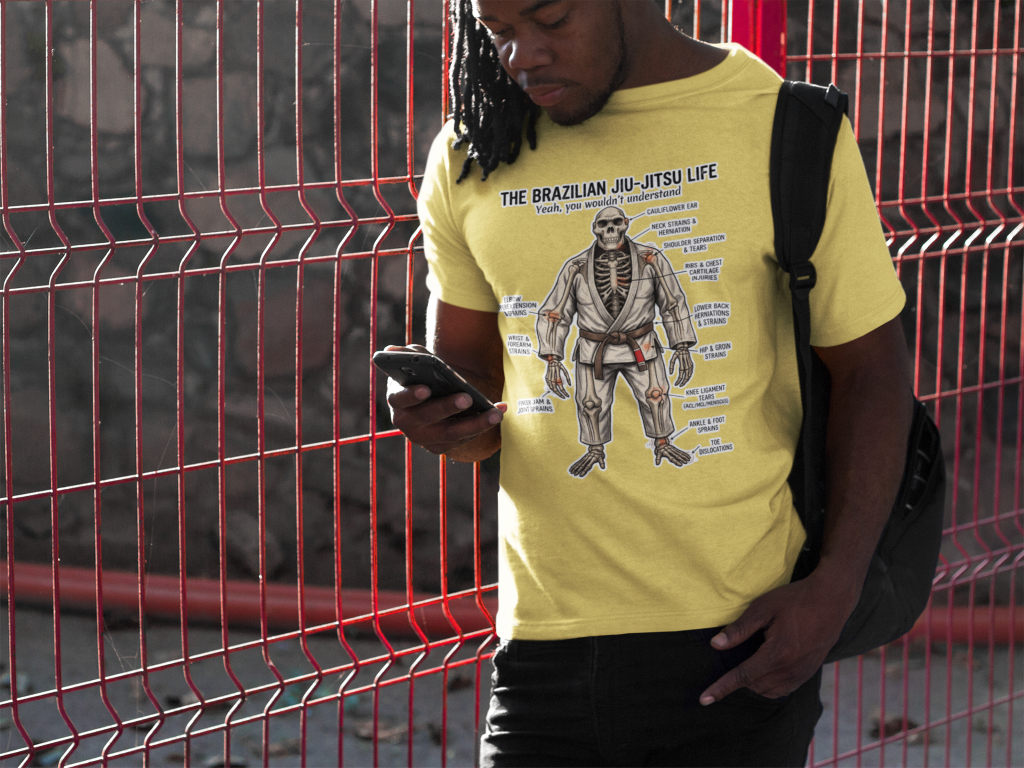








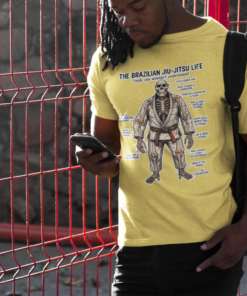




The Brazilian Jiu-Jitsu Life: Why We Happily Pay to Get Folded Like Lawn Chairs
Walk into any Brazilian Jiu-Jitsu academy five minutes before class starts and you will witness a scene that looks less like an athletic club and more like a Civil War field hospital. Grown adults sit on the edge of the mats wrapping miles of white athletic tape around permanently swollen knuckles until their hands resemble lobster claws. Someone in the corner is aggressively massaging a mysterious knot in their neck. Another guy is casually popping his own rib back into place while asking his training partner how the kids are doing.
If you showed an outsider an anatomical chart of the average grappling hobbyist—complete with cauliflower ears, frayed ACLs, hyperextended elbows, herniated lumbar discs, and toes that point in directions God never intended—they would assume we were surviving a shipwreck. Instead, we pay a monthly subscription for the privilege.
To anyone who hasn’t stepped onto the mats, the obsession looks like pure masochism. To those of us living the jiu-jitsu life, it makes total sense. Mostly because we’re slightly delusional, and partly because nothing else in the modern world feels quite like it.
Nothing Cures Anxiety Like Being Strangled by an Accountant
Modern life is full of low-grade, inescapable stress. You spend all day staring at spreadsheets, answering emails that could have been a text, and worrying about things you can’t control. Then you put on a heavy cotton pajama uniform, tie a belt around your waist, and spend an hour trying to stop a 210-pound tax attorney from folding your spine in half.
It is the purest form of forced mindfulness ever invented. When someone has a deep collar choke locked around your windpipe, your brain physically cannot worry about your mortgage, your inbox, or that awkward thing you said at a party three years ago. Every ounce of your consciousness narrows down to a single, crystal-clear objective: get air. The moment you tap, take a breath, and slap hands to start again, your everyday problems feel hilariously small. Jiu-jitsu doesn’t eliminate your stress; it just replaces existential dread with the immediate, solvable problem of getting a guy off your chest.
Trauma Bonding in Murder Pajamas
In the real world, personal space is sacred. On the mats, personal space is a myth that dies during warm-ups. Within ten minutes of meeting a complete stranger, you are sweating on each other, tangled in each other’s limbs, and engaging in high-stakes, involuntary yoga.
There is something oddly profound about trusting someone to crank on your shoulder joint right up to the exact millimeter before a tear—and knowing they will let go the instant you tap. It builds a bizarre, unbreakable camaraderie. Normal friends ask how your weekend went; jiu-jitsu friends ask if your meniscus is still clicking, offer you unsolicited physical therapy advice, and cheerfully try to wrist-lock you during a goodbye hug. You haven’t truly bonded with someone until you’ve thanked them for choking you nearly unconscious and immediately asked them to show you how they did it.
The Dopamine Hit of “Human Chess”
Practitioners love to tell bewildered coworkers that jiu-jitsu is “high-speed human chess,” mostly because it sounds way more sophisticated than “sweaty adult tumble-fighting.” Yet behind the pretentious metaphor lies the real hook: it is an endless, addictive puzzle.
There is no ceiling to how good you can get, which means you spend years getting humbled by people half your size. You drill a sweep four hundred times, fail at it for six months straight, pull a groin muscle attempting it in month seven, and then—on one glorious Tuesday night—it effortlessly works. You tip a training partner over like a felled redwood, land smoothly in side control, and experience a surge of pure dopamine strong enough to make you completely forget that your left knee sounds like a bag of crushed Doritos whenever you walk up stairs.
The Collective Medical Delusion
Perhaps the biggest reason we keep coming back is our shared, unshakable refusal to accept medical reality. To a normal person, a doctor saying, “You have a minor cartilage tear and severe joint inflammation” means six weeks of rest on the couch. To a jiu-jitsu practitioner, it translates to, “So I just need to play half-guard on my good side and avoid takedowns until Saturday.”
We treat every new ache as a tactical adjustment rather than a warning sign. Jammed fingers just mean working on your no-gi grips. A tweaked lower back is simply the universe telling you it’s time to develop a killer top-pressure game. And cauliflower ear? That isn’t a hematoma—it’s a permanent badge of honor that warns strangers at the grocery store not to cut you off in the produce aisle.
At the end of the day, yeah, nobody outside the gym really understands it. Why would anyone voluntarily trade intact ligaments and pain-free mornings for the chance to get crushed under someone’s chest? Because out there in the real world, everything is soft, predictable, and safe—and on the mats, even when you’re limping toward the exit with an ice pack taped to your shoulder, you have never felt more alive
Be the first to review “The BJJ life and all its injuries”
Related products

Brazilian Jiu-Jitsu T-shirts
$29.00


Brazilian Jiu-Jitsu T-shirts
$29.00

Brazilian Jiu-Jitsu T-shirts
$29.00


Brazilian Jiu-Jitsu T-shirts
$29.00


Brazilian Jiu-Jitsu T-shirts
$29.00


Brazilian Jiu-Jitsu T-shirts
$29.00

Brazilian Jiu-Jitsu T-shirts
$29.99
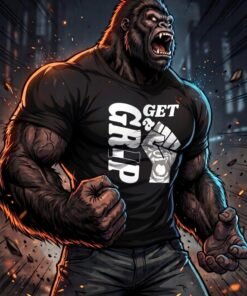

Brazilian Jiu-Jitsu T-shirts
$29.00
Reviews
There are no reviews yet.